
Eighteen Months to Rebuild a Sport Organization's Governance
Sep 02, 2026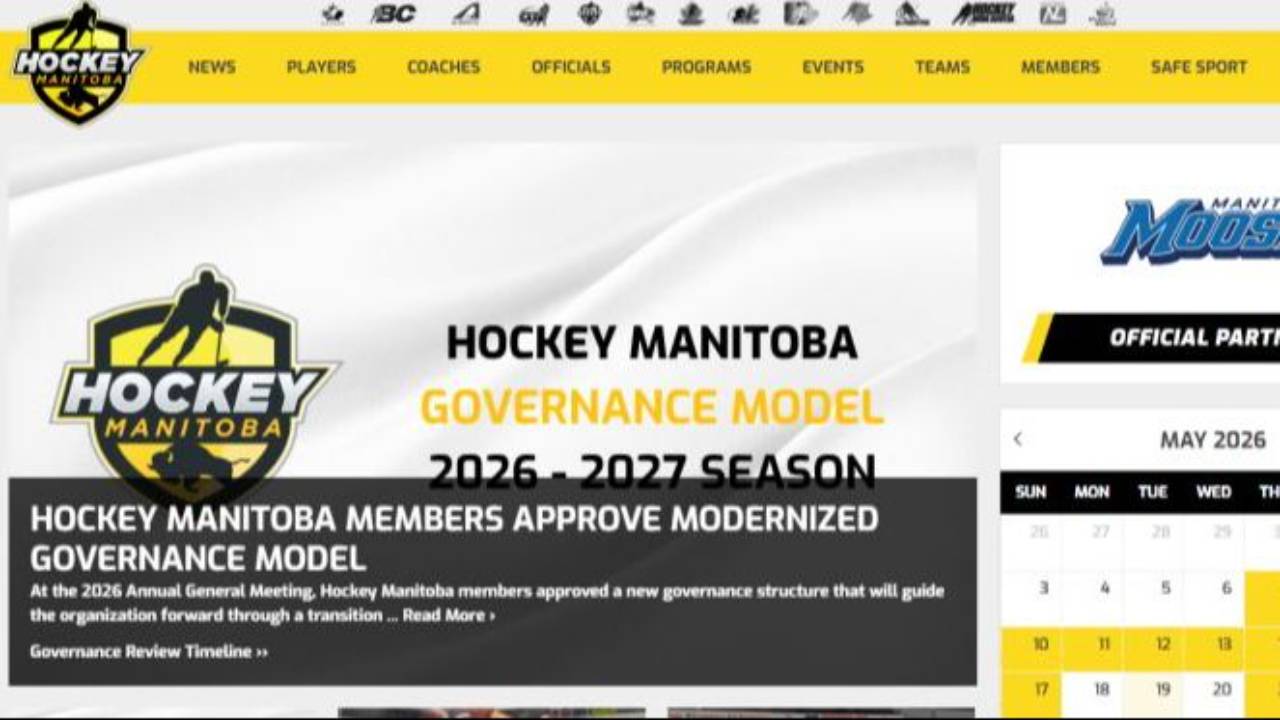
This past May, Hockey Manitoba's membership passed four motions at their Annual General Meeting: (1) Amend the Articles of Incorporation. (2) Adopt an entirely new set of bylaws which included a new voting structure. (3) Adopt transitional bylaws to bridge the old structure into the new one. (4) Elect a wholly new board, without positions, on a new term schedule. All four passed by a wide majority.
Where It Started
In May 2024, Hockey Manitoba's board initiated a full governance review. By November, they'd issued an RFP for an external consultant. In December, they contracted Spark Solutions, and by February 2025, I had a report back in the board's hands.
The governance review found an operational board leaning heavy into operations, with five elected to represent specific portfolios from five separate Councils. The nominating committee lacked proactivity and formal process. New directors got no formal onboarding. Decision-making was slow, reactive, and susceptible to conflicts of interest, in part because the board lacked a governance framework to prevent it. The report offered 28 recommendations for improvement.
The board spent February through April 2025 deliberating the report before bringing an update to members at their May AGM. At the AGM, members were invited to envision what hockey in Manitoba should look like in 2035. Inclusive. Safe. Transparently governed. Consistent whether a kid's playing in Winnipeg or a rink hours away. That cohesive vision offered something to imagine and build behind.
The Middle, Where Most of the Work Happens
After the governance review was completed, Hockey Manitoba moved into a governance support retainer with Spark Solutions to complete the work identified within the 28 recommendations.
By June, the board had formed three workgroups and held expressions of interest. The first took on what an independent board of directors would look like: roles, size, term limits, how officers get elected, what happens to the committee structure. The second rebuilt the nominations process from the ground up: a skills matrix, real recruitment practices, an onboarding process, a way to monitor and evaluate the board's own performance. The third explored whether the membership's voting structure could be modernized at all, and what genuine engagement with that membership would need to look like.
They worked through the summer and into the fall. In November, all three workgroups brought recommendations back to the board. In December, the board deliberated those recommendations and released a working draft of the modern governance structure to the membership. Then came the part no governance review can skip: real consultation. Sessions in February 2026. Proposed bylaws circulated in April. A town hall the same month, open to anyone with a question or an objection.
The middle work was challenging. It’s what I’d imagine it would feel like if you were crossing the ocean, headed for your destination but water as far as your eye can see. Everyone remained committed to the work but it began to feel fatiguing.
What the Vote Actually Changed
The AGM brought everything to bear. By passing the motions, the membership restructured the board's shape, replaced its bylaws outright, changed its voting structure, laid out transitional bylaws bridging this AGM to the next, and elected a brand-new board on the term schedule those bylaws created.
The new model asked the membership to give up decision making authority and trust that a governance board would strengthen the organization and the sport. That is a hard thing to ask a group of committed volunteers to accept, but it was necessary if the organization wanted to meaningfully advance its governance. And now, it has created a new foundation from which it can grow.
Whose Work It Is Now
The governance support retainer with Spark Solutions concluded at the end of June. The board felt confident that they had what they needed to take the reigns from there. A governance review and ongoing governance support isn't meant to create a standing dependency on the firm who completed it. It's meant to leave a board with a structure, a plan, and enough of its own capacity to run without me in the room.
What This Actually Teaches Other Boards
If your organization is carrying something similar (an operational board that dreams of moving to governance, elected bodies whose authority nobody's revisited in years, a nominating process that runs on relationships instead of process), this kind of work takes longer than a single planning cycle, usually with a stretch in the middle that feels less certain than the beginning. That's exactly what a governance support retainer is built for: steady, experienced support through that stretch, while your board does the building.
If your last governance conversation stalled out at “we should really look at this,” let's talk about what a governance review or governance support retainer could look like for your organization.
Stay connected with news and updates!
Join our mailing list to receive the latest news and updates from our team.
Don't worry, your information will not be shared.
We hate SPAM. We will never sell your information, for any reason.