Is Your Working Board Ready to Become a Governance Board?
Oct 07, 2026
The president runs registration. The treasurer keeps track of the books and sells the 50/50 tickets. The vice-president lined the fields on Saturday and chaired the meeting on Tuesday.
If that sounds like your board, you have a working board (also called an operational board). It’s where the directors mostly or exclusively do the hands-on work of running the organization, usually because there are few or no staff to hand that work to.
While a working board may be the perfect fit for some organizations, others aim to make the shift to a governance board when they’re ready. This article discussed some of the signs that indicate you’re ready to begin making the shift.
What is the difference between a working board and a governance board?
A working board makes decisions about its operations and the directors do the bulk of the hands-on work. A governance board sets direction and oversight, and “stays out of the kitchen”, leaving operations to staff.
On a working board, directors plan the season and then run it. On a governance board, directors decide where the organization is going, approve the budget, manage risk, and hold one employee accountable for the rest. Read more about that in Steer, Don't Row: Governance vs. Operations.
There are variations to this as well. Some operational boards have a single, or a few, part-time or full-time staff and the directors support the Executive Director by doing much of the work.
In an ideal situation, boards who are operational are able to effectively balance operations while also stewarding the organization and guiding its strategy. If they’re not, we should assess why.
Should every sport organization move to a governance board?
No. A working board is a valid model, and the right one for most volunteer-run clubs. The move makes sense only when your circumstances calls for it.
Susan Kenny Stevens makes this case in Nonprofit Lifecycles: Stage-Based Wisdom for Nonprofit Capacity. Organizations pass through seven stages: idea, start-up, growth, maturity, decline, turnaround, and terminal. No stage is the "good" one. Each stage describes where nonprofit organizations are at and asks something different of its people.
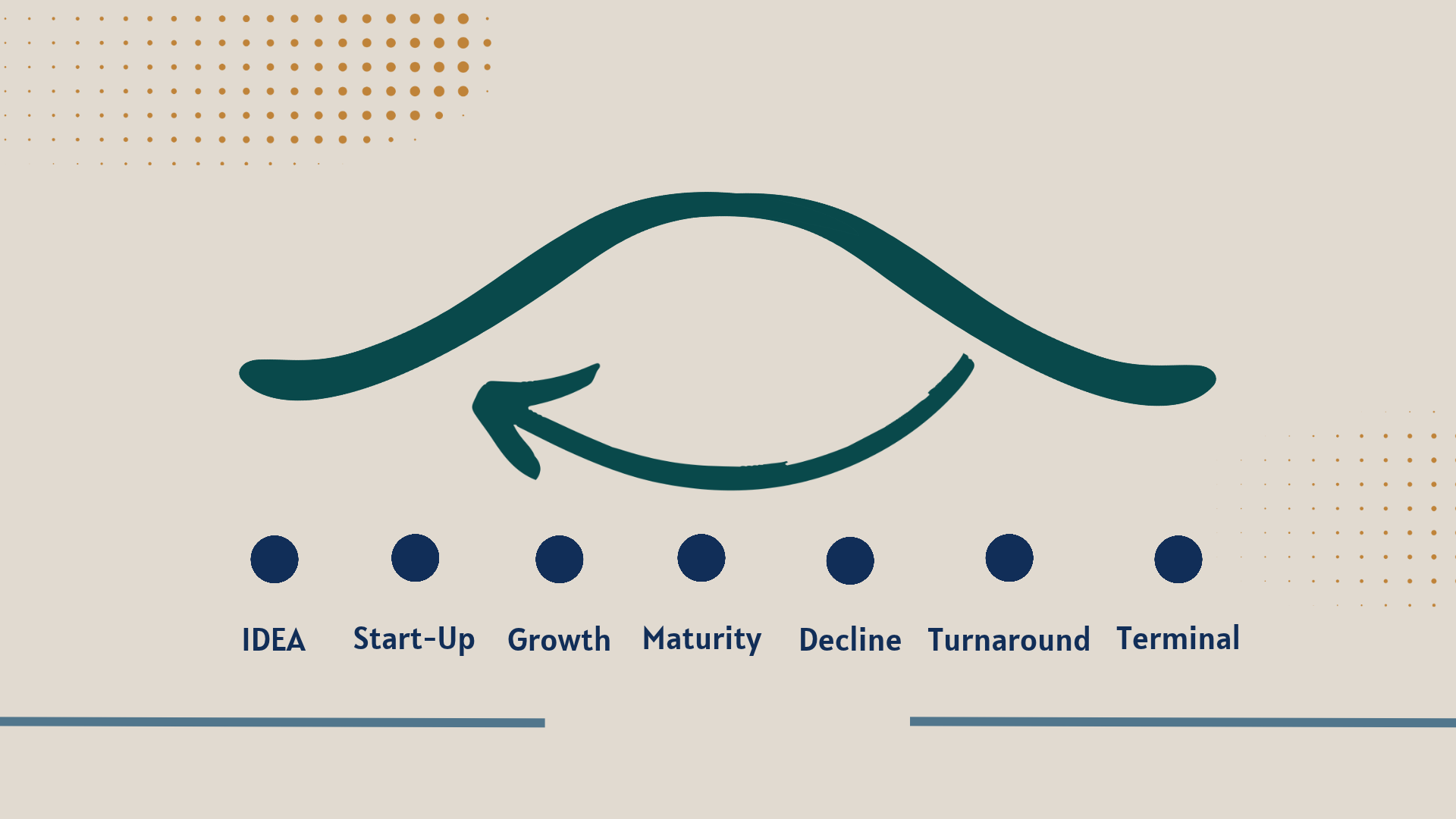
As organizations progress through growth and approach maturity, they may find they’re ready to move to a governance board.
In growth, the organization sees opportunity everywhere and, as a result, its people are likely stretched thin. Systems can lag behind demand. Finances are getting more complicated. To augment its skills and knowledge, the board starts recruiting beyond its immediate circle, and its structure begins to formalize.
In maturity, the board leads direction, works through policy, and leaves management to seasoned staff.
How do you know your organization is ready?
You are likely ready when complexity has outgrown volunteer time, it makes sense for staff can carry operations, and the board wants to shift its attention to direction and risk.
Six signs tend to show up together:
One: Your base is strong. Membership is steady and programs no longer depend on one heroic volunteer.
Two: Complexity is climbing. You manage a facility, several staff, or a budget and reserve large enough to need careful stewardship.
Three: Operations need a dedicated lead. The work has reached the point where a staff person should be managing it, or already is.
Four: The board wants room for different work. Directors want to spend their time on leadership, strategy, and risk, and the operational agenda leaves no space for it.
Five: You need skills your circle does not have. Outside directors may bring legal or HR expertise and diverse relationships. Often the candidates you approach say they won’t join an operational board because they’re not prepared to roll up their sleeves in that way.
Six: Two hats are causing friction. Directors who make a decision and then deliver the program live on both sides of the fence. Clearer roles reduce conflicts of interest.
If more than one of these signs feel familiar, it might be time to bring this discussion to the board table.
What tells you your organization is not ready?
Here are three signs your board may not be ready.
One: The board will not let go. If directors are firmly resistant to going hands-off on operations, a new structure on paper will change nothing in practice and you will experience friction with your staff who are trying to take the reins.
Two: There is no agreement on managing staff. A governance board works through one person who runs operations. If directors disagree on how they will direct and support that person, the staff member pays for it.
Three: Members are strongly opposed. Voting members may see the change as giving up decision-making power or influence. Bylaw changes usually need their vote, and their concerns will need to be heard and worked through before anything else.
These three signs aren’t permanent, and if a board is committed, it will be possible to find a way forward. If you cannot reach a commitment to work through things and find a path forward, you are not a good candidate for the move yet. That is useful to know before you spend a year on it.
Where does a governance review fit?
If you’re ready to become a governance board, our recommendation is to start by engaging in a governance review. A governance review shows what is already in place, what has to change, and in what order, so you move with a plan instead of using your best guess.
Most boards making this move already have some of the pieces. By engaging in a governance review, you receive a methodical plan of attack. Time is then spent on what matters first.
Hockey Manitoba, a former client, started with a governance review before shifting from an operational board to a governance board. Read about what that eighteen-month process looked like.
Deciding your next step
Moving from a working board to a governance board is a big change, and it takes time. It’s worth doing when your organization is ready and your board is committed to the work.
Bring the six signs to your next board meeting and talk through which ones you’re seeing. If the conversation points toward making the shift, a governance review is the place to start. If the signs aren’t there yet, a working board may still be the right fit for your organization.
If you’d like support along the way, let's talk about what that could look like for your organization.
Stay connected with news and updates!
Join our mailing list to receive the latest news and updates from our team.
Don't worry, your information will not be shared.
We hate SPAM. We will never sell your information, for any reason.